ServicesCalcium Removal and Tile Cleaning
Calcium Removal and Tile Cleaning in Higley
That white or gray crust at your waterline is calcium left behind as pool water evaporates. We take it off your tile and stone without scratching the surface. The same person who quotes the job does the work and answers your questions.
What calcium buildup is and when to deal with it
Every time pool water evaporates, the minerals stay behind. Higley tap water is hard to begin with, so each top-off adds a little more calcium. Over a summer it builds into a band along the tile that a brush won't touch.
There are two kinds. Calcium carbonate is white and flaky. It comes off with the right cleaner and some scrubbing. Calcium silicate is gray, glassy and hard as rock. It usually takes bead blasting to remove without hurting the tile.
If you can still scrape the scale with a fingernail, now is a good time. The longer it sits, the thicker and harder it gets, and the bigger the job.
What the work includes
- 01
A scale test on your tile
We check a few spots to tell carbonate from silicate and see how thick it is. That decides the method. You don't pay for blasting when a cleaner and a brush would do.
- 02
Bead blasting for hard scale
For silicate and thick carbonate we blast with a fine media at low pressure. It breaks up the scale and leaves the glaze on the tile. Glass tile gets a softer media because it scratches easily.
- 03
Hand work on corners and grout
Steps, corners and the area around the skimmer get hand tools and pumice where the tile can take it. Grout lines get cleaned, not dug out.
- 04
Spillways and water features
Rock waterfalls, sheer descents and spa spillovers collect scale fast because water splashes and dries on them all day. We can do them on the same visit.
- 05
Cleanup and a water check
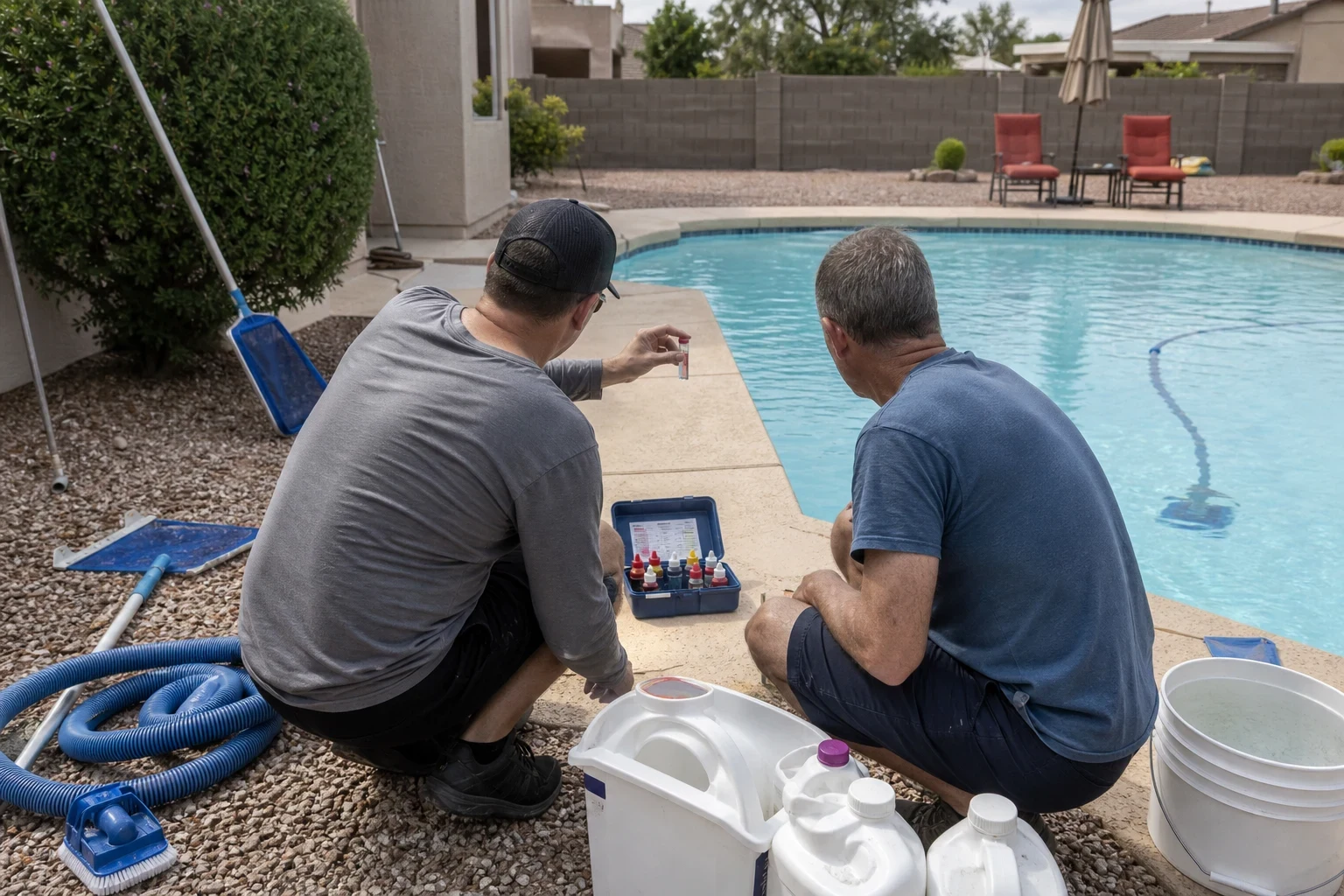
Spent media gets vacuumed out of the pool and rinsed off the deck. We test your calcium hardness and pH before we leave and tell you where they stand.
Questions about Calcium Removal and Tile Cleaning?
Call(480) 568-5792Signs your tile needs calcium removal
A white crust at the waterline
A chalky line that wipes partly clean, then comes right back. That is carbonate building up, and it only gets thicker.
A gray band brushing won't move
If the scale feels rough and glassy and your brush slides right over it, you are likely looking at silicate.
Dull, cloudy tile color
Blue or patterned tile that looks faded under a thin film is often coated in scale, not worn out.
Crusty water features
White streaks down a rock waterfall or a spa spillover mean the same minerals are drying on every splash.
Rough spots that snag
Scale on steps and benches can scrape feet and catch swimsuits. That is worth fixing before swim season.
How a tile cleaning day goes
- 1
A free quote by phone, then a look
You call and tell us what you're seeing. We set a time to look at the tile in person. The person you talk to is the one who comes out and gives you the quote.
- 2
Lower the water a few inches
Scale comes off best when it is above the water. We drop the level a few inches below the tile line and set up away from your plants and windows.
- 3
Remove the scale
We work around the pool section by section, checking the tile as we go. Our company is firefighter owned and operated, and we run the site that way: hoses kept off walkways, equipment out of the path, and kids and pets clear of the blasting area.
- 4
Clean up and refill
We vacuum out the spent media, rinse the deck and bring the water back up. Then we balance the chemistry so the fresh water doesn't start new scale right away.
What moves the price
We price calcium removal by the job, after we see the tile. You get a written estimate broken out by line. The same person who gives it is there on the day, so nothing changes without you hearing about it first.
- Length of the tile line
- A small play pool and a large freeform pool with a spa are very different amounts of tile. We measure the perimeter instead of guessing.
- Type and thickness of scale
- Thin carbonate cleans up quickly. Thick silicate takes more blasting time and more media.
- Tile material
- Glazed ceramic handles standard media. Glass tile and natural stone need gentler media and slower work, which adds time.
- Water features and spa
- Waterfalls, spillways and raised walls add surface area and often need hand work in tight spots.
- Water level and refill
- Most jobs only need the water lowered a few inches. If the scale runs deep down the wall, more water comes out and more goes back in.
Calcium and tile questions
Will bead blasting scratch my tile?
Not when it's done right. We pick the media and pressure to match your tile, and we test a small spot first. Glass tile gets a softer media and a lighter touch. If a tile is already cracked or loose, we'll point it out before we start.
How long does calcium removal take?
Most pools take part of a day. Heavy silicate, a long tile line or a lot of rock work can stretch it longer. We'll tell you what to expect when we give you the quote.
Do I have to drain the pool?
Usually not. We only lower the water a few inches below the tile. If the plaster itself is stained or scaled, that's a different job, and we'll talk with you about an acid wash or a pool drain and refill.
Can I just use a pumice stone myself?
On light carbonate and plain ceramic tile, sometimes. Pumice will scratch glass tile and some glazes, and it barely touches silicate. If you're not sure what you have, we can tell you when we look.
How do I keep the calcium from coming back?
Keep the water balanced and brush the tile line often. Our weekly pool cleaning covers both, with chemicals included in the monthly price. New customers get a free first month of weekly service. There's no contract, so you can cancel whenever you choose.
Get the white line off your tile
Tell us what you're seeing at your waterline and we'll set a time to look. One person handles it from the quote to the final rinse. We also offer a discount to veterans and first responders.