ServicesPool Drain and Refill
Pool Drain and Refill in Higley
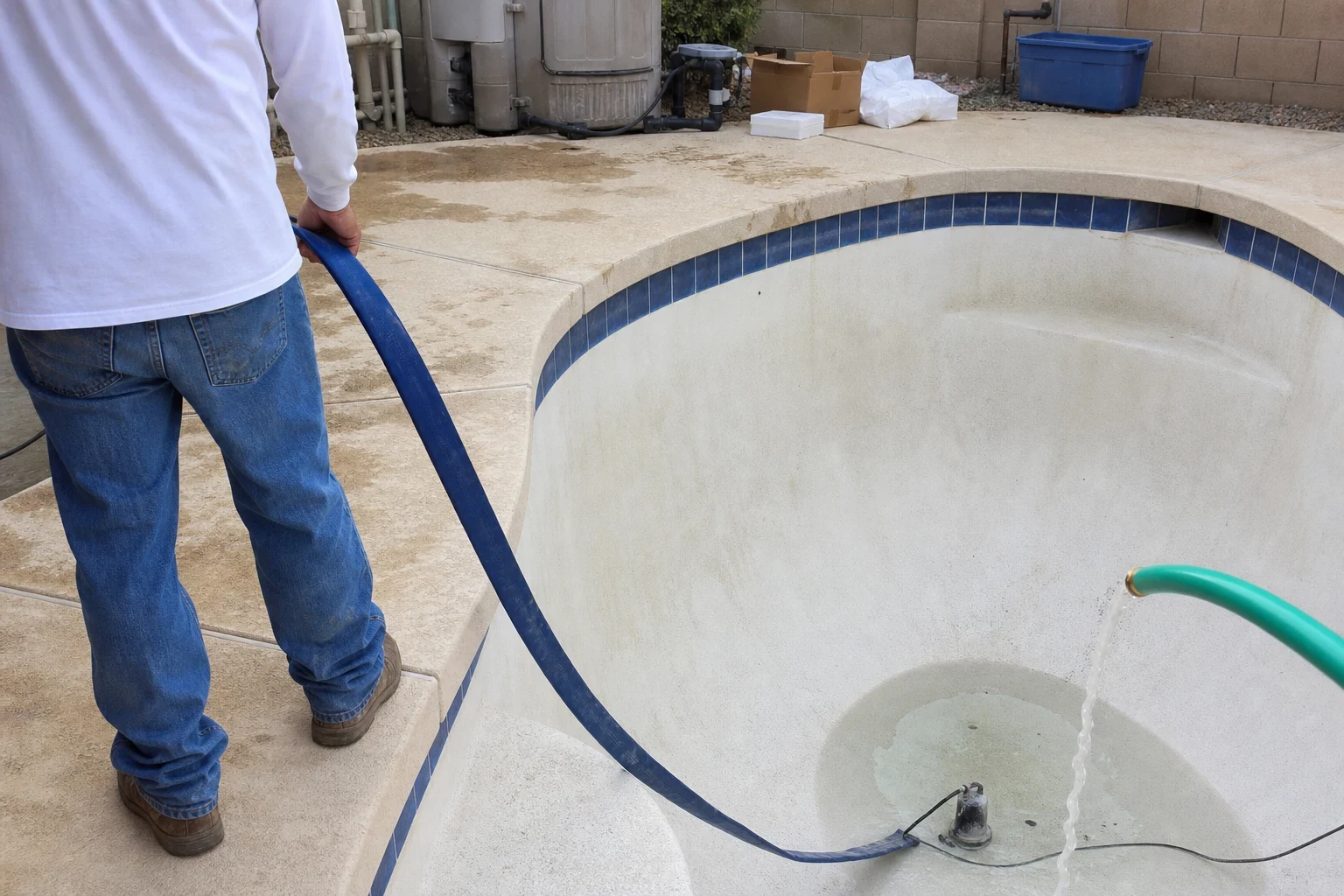
Old pool water gets loaded with minerals and stabilizer until nothing you add seems to work. We test it, drain it the right way, check the shell while it's empty, and refill and balance it. You deal with one person the whole time.
Why pool water needs a fresh start
Pool water doesn't wear out. It fills up. Every week the sun pulls water out and leaves the minerals behind. Calcium, salts and stabilizer stack up until chlorine and acid stop doing their job. Adding more just adds more dissolved solids.
A drain and refill resets all of that. Most pools here need it every few years, not every year. We test your water first and tell you straight if it can wait.
We're firefighter owned and operated, and we run a drain the way we'd run any job with pumps and hoses on the ground. It's planned ahead, watched the whole time and never left running on its own. The same person you talk to on the phone sets the day, handles the work and checks the water after.
What a drain and refill includes
- 01
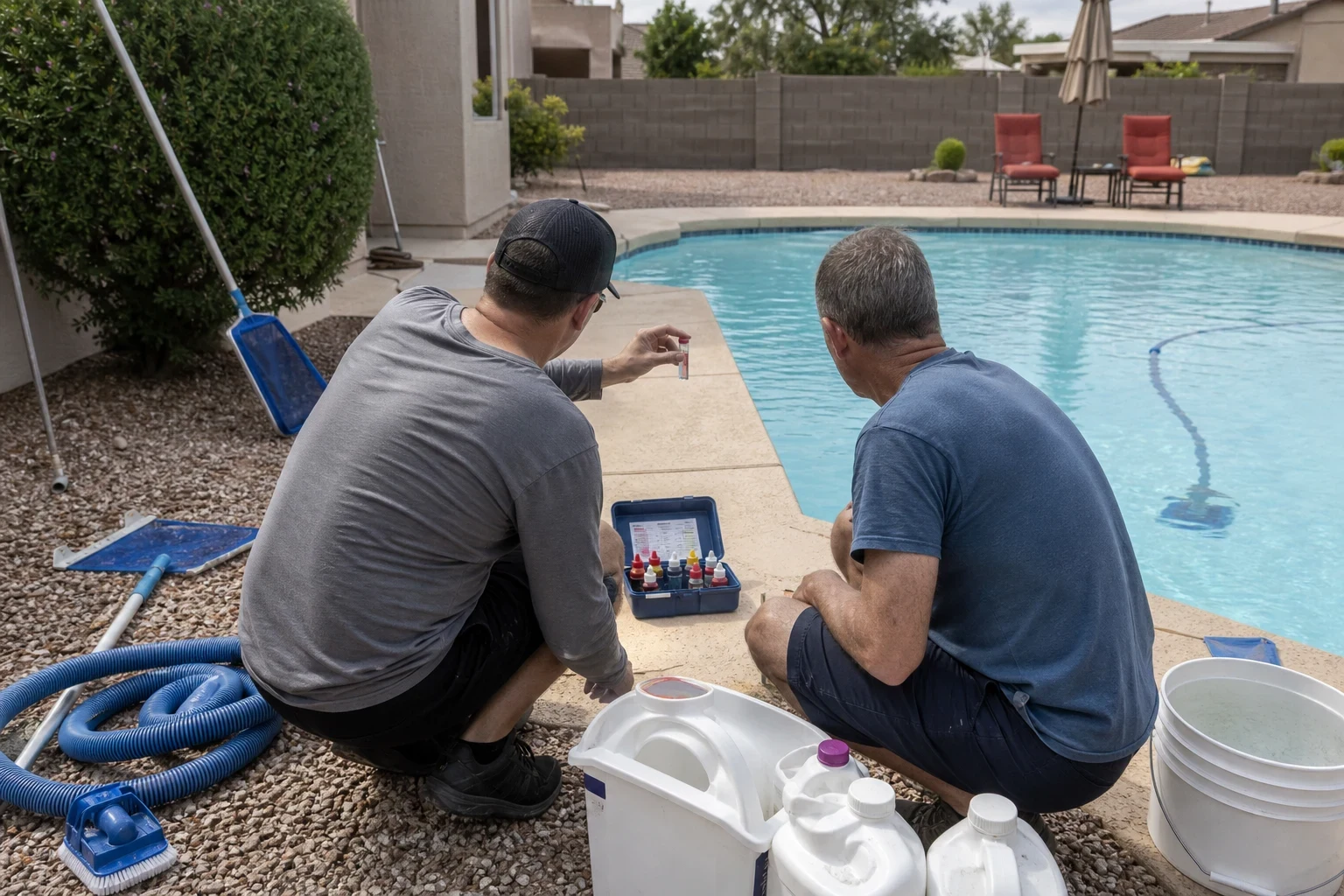
Water test before we drain
We check total dissolved solids, calcium hardness and stabilizer levels. If the numbers say your water is fine, we tell you and don't drain it.
- 02
A controlled drain to the right outlet
We use a submersible pump and run the hose where local rules want the water to go, usually your home's sewer cleanout instead of the street. We confirm the rule for your address before we start.
- 03
A look at the empty shell
An empty pool shows things water hides. We check for cracks, hollow or flaking plaster, loose tile and the light niche, and we take photos of anything worth knowing about.
- 04
Rinse and debris removal
We clear out leaves, grit and sludge from the floor and around the main drain so the new water starts clean.
- 05
Refill and startup chemistry
Once it's full, we balance alkalinity, pH and calcium, add stabilizer and chlorine, and clean the filter so it isn't pushing old dirt into new water.
Questions about Pool Drain and Refill?
Call(480) 568-5792Signs your pool is due for fresh water
Chemicals stop working
You keep adding chlorine and the reading won't hold. That often means the water is too loaded to respond.
Stabilizer keeps climbing
Chlorine tablets add stabilizer every time they dissolve. Once it gets too high, chlorine can't fight algae well, and the only real fix is diluting it with fresh water.
White crust at the waterline
Hard water leaves scale on tile and plaster. If it comes back fast after cleaning, the water itself is part of the problem.
Cloudy water that won't clear
If the filter is clean and the pump runs fine but the water stays dull, high dissolved solids may be the cause.
Work that needs an empty pool
An acid wash, some plaster or tile repairs and deep calcium removal all need the water out first. We can plan the drain around that work.
How the job runs
- 1
Phone call and water test
You tell us what's going on, and we come test the water. You get a plain answer on whether draining makes sense and what it will cost.
- 2
Pick the right day
We avoid draining in the hottest stretch of summer. Bare plaster sitting in that sun can dry out and crack, so spring, fall and winter are the better windows here.
- 3
Drain day
We shut off the pool equipment, set the pump and route the hose. We check the hydrostatic relief valve in the floor and keep the pool empty only as long as the work needs.
- 4
Refill
We start the fill with hoses. Depending on pool size and water pressure, it can take a day or more. We ask you not to stop it partway, since a pause can leave a ring line on the plaster.
- 5
Balance and hand off
We bring the water into balance, clean the filter and brush the walls. We'll tell you what to watch for in the first couple of weeks.
What moves the price
Every pool is a little different, so we quote after we've seen yours and tested the water. The quote is written out line by line so you know what each part is for. Your water bill for the refill comes from your water company and is separate from our price.
- Pool size
- More gallons means more pump time, a longer fill and more startup chemicals.
- Work done while it's empty
- Adding an acid wash, tile cleaning or a repair raises the total, but it costs less than draining twice.
- Condition of the water
- Green or heavy sludge takes longer to pump and clean out than clear water that's just worn out.
- Hose run and access
- A long distance from the pool to the sewer cleanout, or tight side yards, can add time on drain day.
Drain and refill questions
How often does a pool need to be drained?
Most pools in this area need it every few years. It depends on how much you top off, what chlorine you use and how hard the water is. We go by test results, not the calendar.
Can you drain my pool in the summer?
We'd rather not. Plaster left bare in peak summer sun can dry out and crack. If it truly can't wait, we keep the time empty as short as possible.
Where does all that water go?
Usually into your home's sewer cleanout, which is what local rules generally call for. We check the rule for your address before we start so you don't get a notice later.
Can draining damage my pool?
It can if it's done carelessly. An empty shell can shift if there's water pressure under it, and plaster can suffer in heat. We check the relief valve, pick a sensible day and don't leave the pool sitting empty.
My pool is green. Do I have to drain it?
Not always. A lot of green pools can be brought back with our green to clean recovery service and keep their water. If testing shows the water is also worn out, we'll tell you draining is the better call.
Should I get an acid wash at the same time?
If your plaster is stained or scaled, that's the cheapest time to do it, since the pool is already empty. If the surface looks good, you don't need one, and we'll say so.
Start with a water test
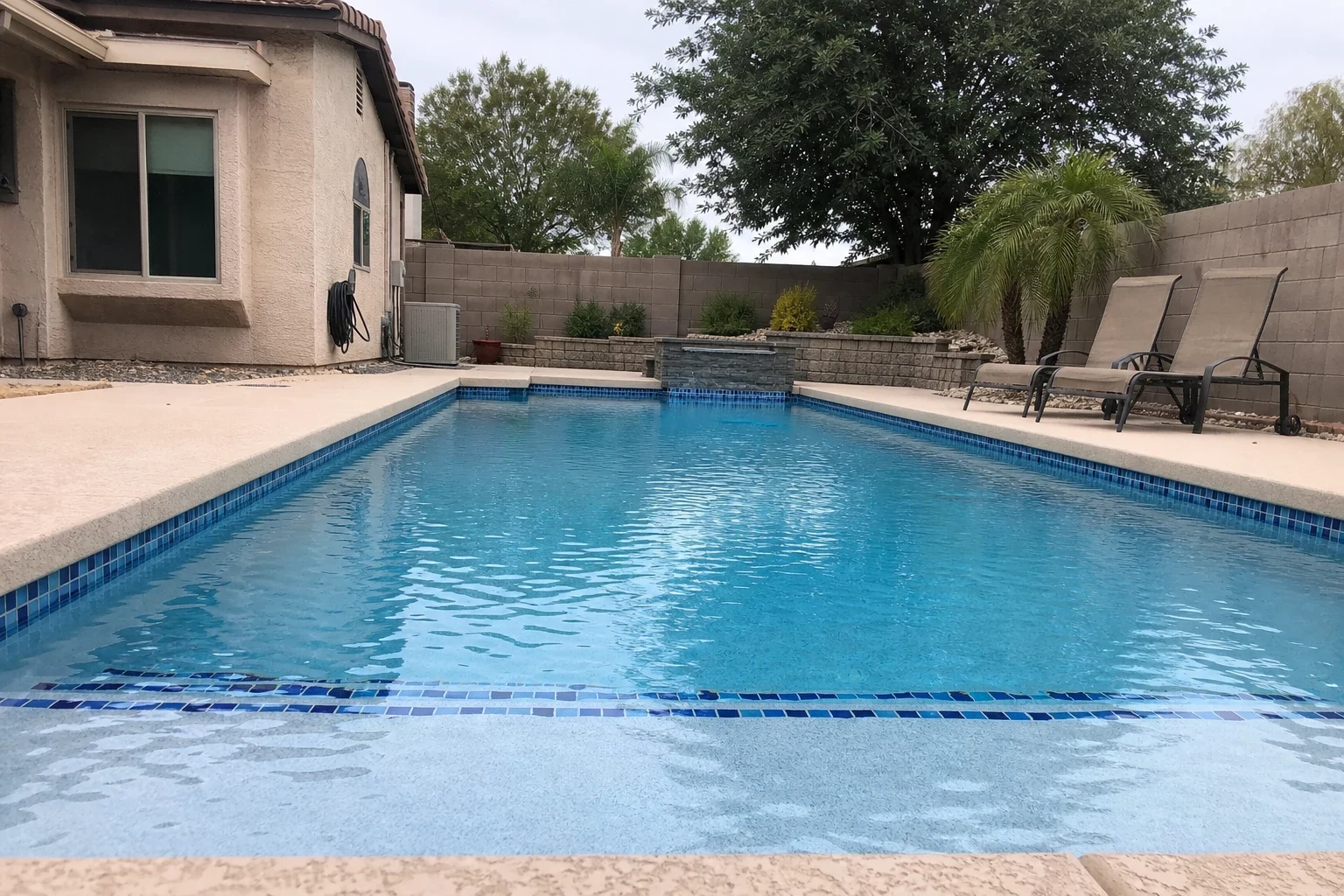
Tell us what your pool is doing and we'll come test the water. You'll know if it needs a drain, what's involved and what it costs, from the same person who does the work.