ServicesPool Repair
Pool Repair in Higley
Your pump is humming but not moving water, or the filter is dripping on the pad. We find the cause, tell you what it takes to fix, and do the work. The same person you talk to on the phone sees the repair through to cleanup.
What pool repair covers with us
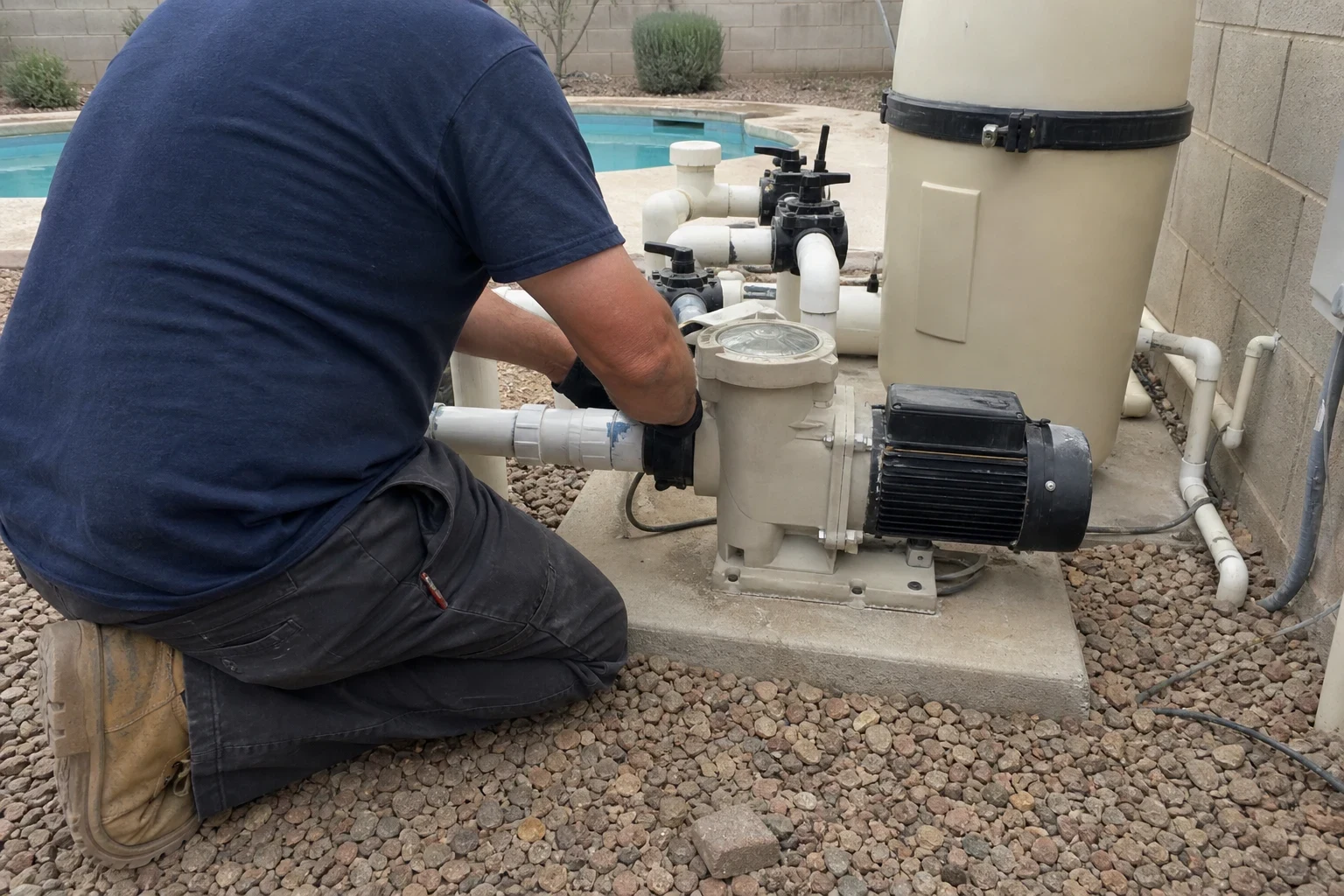
Most pool problems start at the equipment pad. That is the pump, filter, valves, timer and the plumbing that ties them together. We repair those parts so your water moves, filters and stays clean again.
Some fixes are small. A worn pump lid o-ring can let air into the system and make the whole pool run poorly. A bad capacitor can stop a motor that is otherwise fine. Other times the part is done and replacement is the better spend. When that happens we say so and walk you through Equipment Installation instead.
You deal with one person the whole way. The same contact answers your call, explains what we found, sets the work and checks it after. No passing you between an office and a crew.
What we fix
Pumps and motors
Noisy bearings, motors that hum but will not start, shaft seals that drip, and impellers clogged with debris. We test before we replace anything.
Filter tanks and parts
Cracked or worn o-rings, broken clamp bands, torn cartridges and damaged grids. A filter that will not hold pressure gets checked part by part. If it only needs a good cleaning, that is our Filter Cleaning service.
Valves and pad plumbing
Stuck diverter valves, leaking unions and cracked PVC above ground at the pad. Sun and heat make exposed pipe brittle over time, and we replace the bad sections cleanly.
Timers and basic controls
Mechanical timers that drift or quit, worn trippers and controls that no longer run the pump on schedule.
Skimmers, baskets and lids
Cracked skimmer lids, broken weir doors and pump baskets that no longer seal. Small parts, but they keep the system pulling water the right way.
Signs your pool needs a repair
- Water on the equipment pad
- A steady drip near the pump, filter or a union usually means a seal or fitting has failed. It gets worse with time, not better.
- Pump makes new noises
- Grinding or screeching often points to bearings. A hum with no spin is often the capacitor or a jammed impeller.
- Air in the pump basket
- Bubbles in the basket or jets that spit air mean the system is pulling air somewhere on the suction side. That makes the pump work harder and can burn it out.
- Pressure gauge reads odd
- High pressure right after cleaning, or pressure that swings, can mean a blockage or a failing part in the filter.
- Water clouds up even with chemicals right
- If the chemistry checks out but the water will not clear, the problem is usually circulation or filtration, not the water itself.
How a repair goes
- 1
You call and describe it
Tell us what you are seeing and hearing. We ask a few questions and set a time to come look. The quote is free.
- 2
We look at the whole pad
We check the part you called about and the parts around it, because one failure often causes another. We show you what we found and explain it in plain terms.
- 3
You get a clear quote
We tell you what the repair is, what parts it needs and whether repair or replacement makes more sense. You decide. Nothing gets done before you say yes.
- 4
We fix it and test it
We make the repair, run the system, and check pressure and flow before we leave. Old parts and packaging go with us, and the pad is left clean.
What moves the cost of a repair
Every repair is priced after we see it. Two pumps with the same symptom can need very different fixes. We give you the number before any work starts, and we explain what goes into it.
- The part that failed
- A seal or o-ring costs far less than a motor or a filter tank. Some brands also have pricier parts than others.
- Age of the equipment
- Older equipment can have parts that are harder to find. Sometimes the fix costs close to new, and we will tell you when that is the case.
- How much plumbing is involved
- A single bad union is quick. Re-plumbing a section of the pad takes more time and fittings.
- Damage that came with it
- A pump that ran dry can take out its seal and impeller at once. We price what is actually damaged, not a guess.
Pool repair questions
- Should I repair my pump or replace it?
- It depends on what failed and how old the pump is. A capacitor or seal on a newer pump is usually worth fixing. A worn-out motor on an old pump often is not. We give you both options and you choose.
- Can I keep running the pool while I wait?
- Sometimes. A small drip at a union is usually fine for a short time. A pump that screeches, runs dry or trips the breaker should be shut off until we look at it, so the damage does not spread.
- Who do I talk to once the job is booked?
- The same person you spoke to first. They answer your questions, show you what we found, schedule the work and check it after. You do not have to explain the problem twice.
- Who owns the company?
- We are firefighter owned and operated. That shows up in how we work: we check things carefully, explain what we see and do not cut corners on the equipment pad.
- Do you fix pool leaks in the shell or underground pipes?
- Our repair work is at the equipment pad and the parts you can see, like pumps, filters, valves, skimmer parts and above-ground plumbing. If we find a drip there, we fix it. We will tell you plainly what we can and cannot take on before any work starts.
Get your equipment running right
Tell us what the pool is doing and we will come take a look. One person handles it from the first call until the pad is clean. Discount to veterans and first responders.